The AI/ML talent market is evolving at a breakneck pace, but beneath the headline stories about global skill shortages lies a subtler, less discussed challenge: the micro shifts reshaping how organizations hire AI and machine learning developers. For hiring managers aiming to build or scale high-performing AI teams, understanding these nuanced patterns is critical. How, exactly, should you adapt your strategy to not just hire AI/ML engineer talent but to do so efficiently and sustainably in today’s market?
This article unpacks the quiet but impactful changes in candidate availability, skill demand, sourcing channels, and evaluation criteria. Using a clear stepwise approach, we’ll equip you to optimize your processes for hire AI/ML developers.
1. Recognize Changing Candidate Pools and Availability
A key micro shift lies in the evolving supply landscape. Previously, employers flocked to narrow, well-known hubs of AI/ML talent—top-tier universities and established tech companies. However, according to a recent analysis by LinkedIn’s Economic Graph, the candidate pool is decentralizing, with more capable AI/ML professionals emerging from bootcamps, nontraditional educational paths, and international regions.
Actionable Insight:
To hire AI/ML engineers today, expand your sourcing beyond legacy pipelines. Consider partnerships with specialized AI academies or global remote talent. Diversifying your candidate pool widens opportunities while tapping into underutilized reservoirs of skills.
2. Adapt to Shifting Skill Demand and Specializations
The AI ecosystem is fragmenting into more specialized roles. Beyond general AI/ML knowledge, companies now seek expertise in sub-fields like NLP, computer vision, reinforcement learning, or AI ethics. Gartner’s 2023 CIO survey highlights a rising priority on ethical AI and data privacy competencies.
For hiring managers looking to hire AI/ML developers, precision in defining role requirements has become paramount.
Actionable Insight:
Craft granular job descriptions that specify the AI/ML subdomains and technical competencies you need. If you want to hire AI & ML developers who excel in NLP, explicitly list relevant frameworks like Hugging Face Transformers or spacy to attract targeted applicants.
3. Leverage Emerging Sourcing Channels with Data-Backed Strategies
Traditional job boards and recruiter outreach are no longer enough. Data from Stack Overflow’s 2023 developer survey shows that AI/ML talent increasingly gravitates toward specialized communities and platforms—Kaggle competitions, GitHub projects, and open-source AI forums.
Companies that capitalize on these channels gain access to active, engaged practitioners.
Actionable Insight:
Use competition participation and open source contributions as signals when you hire AI/ML developers. Proactively engage with candidates on platforms such as Kaggle or AI-focused Discord servers. Sponsoring competitions or contributing to open-source projects also elevates your employer brand in the AI/ML community.
4. Refine Evaluation Criteria: From Theoretical Knowledge to Practical Impact
Classic coding tests and academic pedigree are insufficient for assessing modern AI talent. Interviews should prioritize problem-solving on real-world datasets, understanding of deployment and scalability challenges, and ethical implications in AI design.
A 2023 report from McKinsey stresses that effective AI teams balance technical skill with business impact and adaptability.
Actionable Insight:
Create multi-stage evaluation processes incorporating technical assessments, case studies, and culture fit interviews. When you hire AI/ML engineer, integrate tasks requiring them to build or improve AI models using your business data. This approach reveals practical proficiency, not just textbook knowledge.
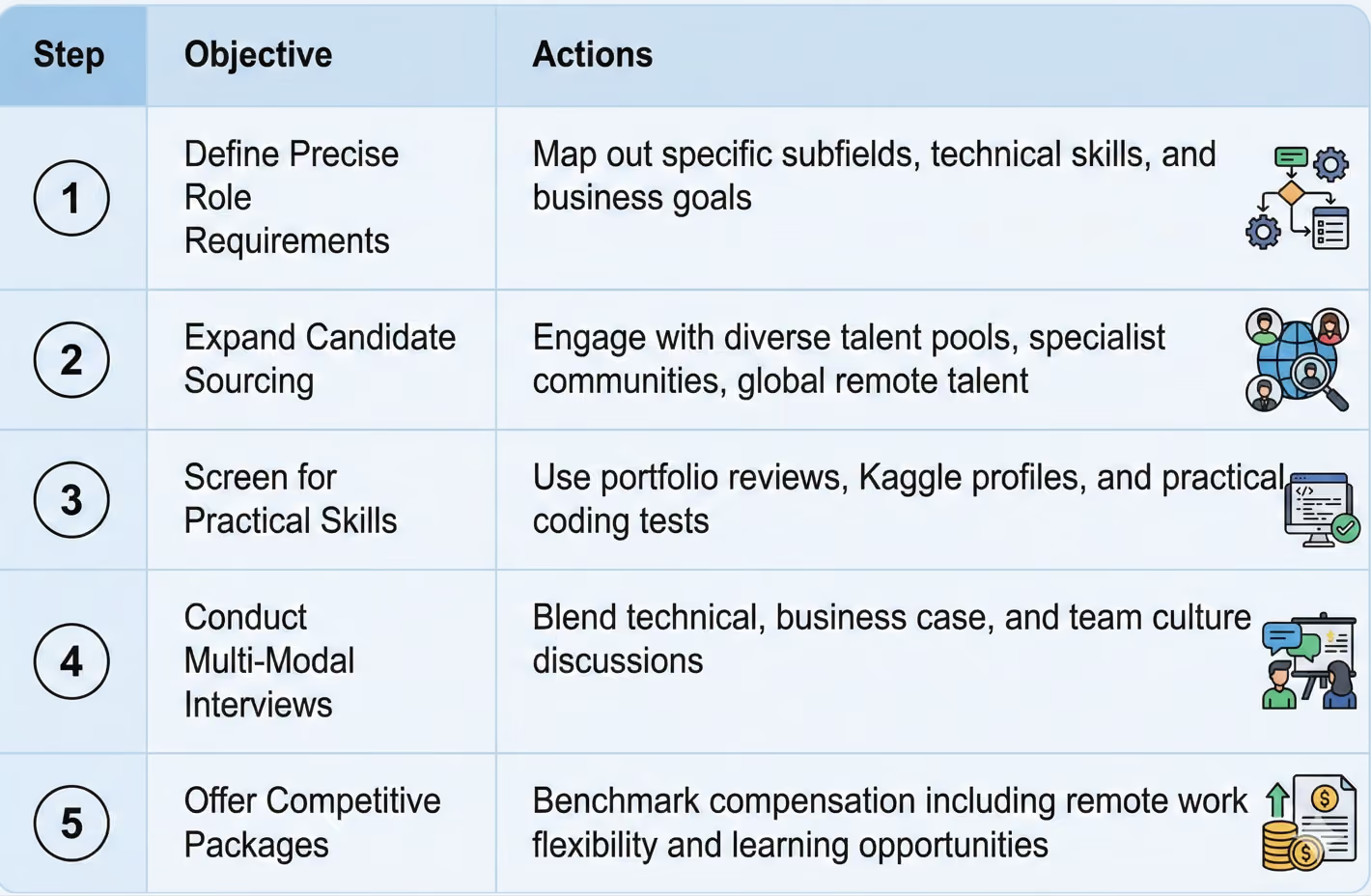
5. A Practical Hiring Framework for AI/ML Talent
Here’s a step-by-step template hiring managers can adopt to optimize their process:
Final Thoughts
The landscape to hire AI & ML developers is not static—it’s a dynamic environment shaped by subtle but critical trends. Candidate availability is more geographically and educationally diverse. Skill demand is increasingly nuanced and specialized. Sourcing channels demand more creative, community-driven approaches, and candidate evaluation must evolve to reflect practical impact.
Organizations that understand and embrace these micro shifts will gain a crucial edge. By expanding talent pools, honing role clarity, engaging niche sourcing platforms, and upgrading evaluation techniques, companies can assemble AI teams that don’t just fill seats but pioneer tomorrow’s innovation.
As you prepare to hire AI/ML engineer in your next recruiting cycle, use these insights to future-proof your hiring strategy. Staying ahead of these subtle market movements separates the leaders from the laggards in the AI arms race.
Sources:
- LinkedIn Economic Graph Reports (2023)
- Gartner CIO Survey (2023)
- Stack Overflow Developer Survey (2023)
- McKinsey Global AI Survey (2023)
Want to sharpen your AI hiring strategy? Check out this in-depth guide : https://www.calyptus.co/blog/how-to-navigate-micro-shifts-in-hiring-ai-ml-developers