If you're looking to apply for backend engineer roles, it’s essential to understand that excelling in backend engineering is as much about how you think as what you build. The mindset, strategic problem-solving, and adaptability are what set great developers apart.
This post unpacks the core thinking frameworks and approaches backend engineers must cultivate by walking through a real-world case study, illustrating the challenges faced and the strategic thought process employed to overcome them. Whether you're eager to apply for backend developer roles or want to refine your approach to stand out when you apply for backend developers, this in-depth exploration will guide you.
The backbone of a Backend Engineer’s mindset
Before jumping into the case study, it’s crucial to grasp what “thinking in the role” entails. Backend engineers are architects of data flow and logic .They must merge foresight, deep technical knowledge, and collaboration skills to build resilient, scalable systems. When approaching any challenge, these are the essential dimensions to hone:
- System Thinking: Understanding the bigger picture, how components interact.
- Problem Modeling: Breaking down complexities into manageable parts.
- Prioritization & Trade-offs: Balancing scalability, performance, and maintainability.
- Collaboration & Communication: Translating technical needs into cross-team alignment
Case Study: Scaling a payment processing microservice at FinPay.
The Challenge
FinPay, a fast-growing fintech startup, faced critical performance bottlenecks in their payment processing system. What was initially a monolithic backend became a patchwork of microservices, straining under increasing user load, causing transaction delays and occasional failures. The CTO announced an urgent initiative to redesign the payment microservice to handle scale and ensure 99.99% uptime.
Enter Alex, a backend engineer who recently decided to apply for backend engineer positions and wanted to deeply understand how to approach such complex real-world challenges strategically.
Step 1: Problem Framing
Instead of jumping directly into code, Alex first framed the problem in these terms:
- What is the business impact of failures? Delayed payments mean revenue loss and customer trust issues.
- What is the current architecture? A tightly coupled monolith with synchronous request handling.
- What are the bottlenecks? CPU exhaustion, database locks, and poor error handling led to cascading failures.
By articulating these, Alex clearly defined measurable goals:
- Reduce latency below 200ms for 95% of requests.
- Introduce fault tolerance to avoid service-wide outages.
- Enable horizontal scalability of the payment microservice.
Step 2: Strategic problem-solving approach
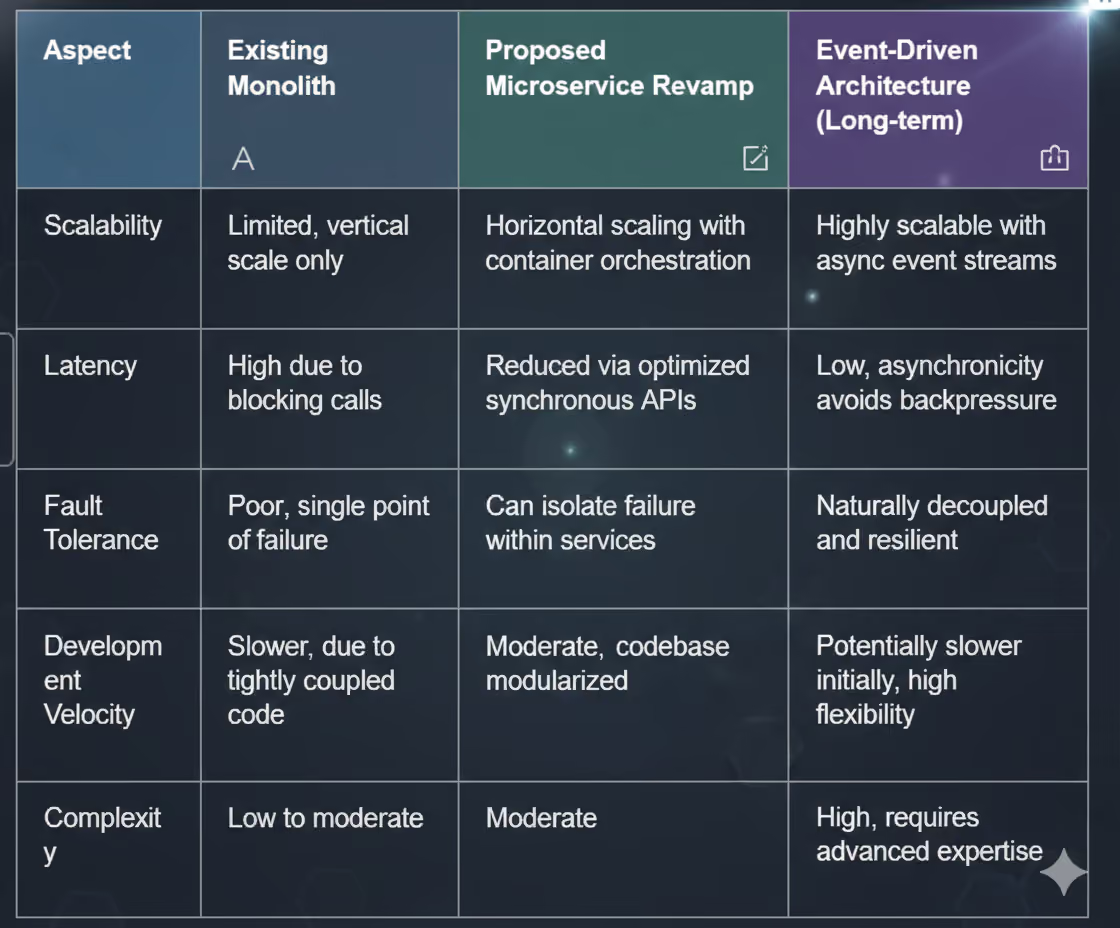
Before recommending a solution, Alex laid out options combining both technical and architectural angles, creating this comparison table:
Step 3: Execution plan & thinking in the role
Adopting a strategic mindset, Alex suggested an incremental approach to manage risk and deliver value quickly:
- Refactor the payment microservice to be stateless, enabling horizontal scaling.
- Implement circuit breakers and retries to manage upstream failures gracefully.
- Introduce caching layers to reduce load on the database.
- Design APIs to be async-ready, paving the way for eventual event-driven migration.
Alex’s thinking reflected key backend engineering principles:
- Think beyond immediate fixes , architect for future growth.
- Fail fast but recover gracefully.
- Communicate trade-offs clearly with stakeholders.
- Incrementally build and iterate to reduce technical debt.
How to position yourself when you apply for Backend Developers
When you apply for backend developers roles, hiring managers look for more than code chops ,they want engineers who think like system owners.
Highlight examples that showcase:
- Analytical rigor: How you analyze and decompose problems.
- Strategic planning: Your approach to balancing immediate vs. long-term goals.
- Collaboration: Your aptitude for cross-functional communication.
- Technical vision: Your experience designing scalable, fault-tolerant systems.
When you apply for backend developer roles, incorporate language that reflects this mindset. In interviews or resumes, you might say:
“In tackling [problem], I first framed the system-level impact, prioritized scalable solutions, and iterated incrementally to balance speed and robustness.”
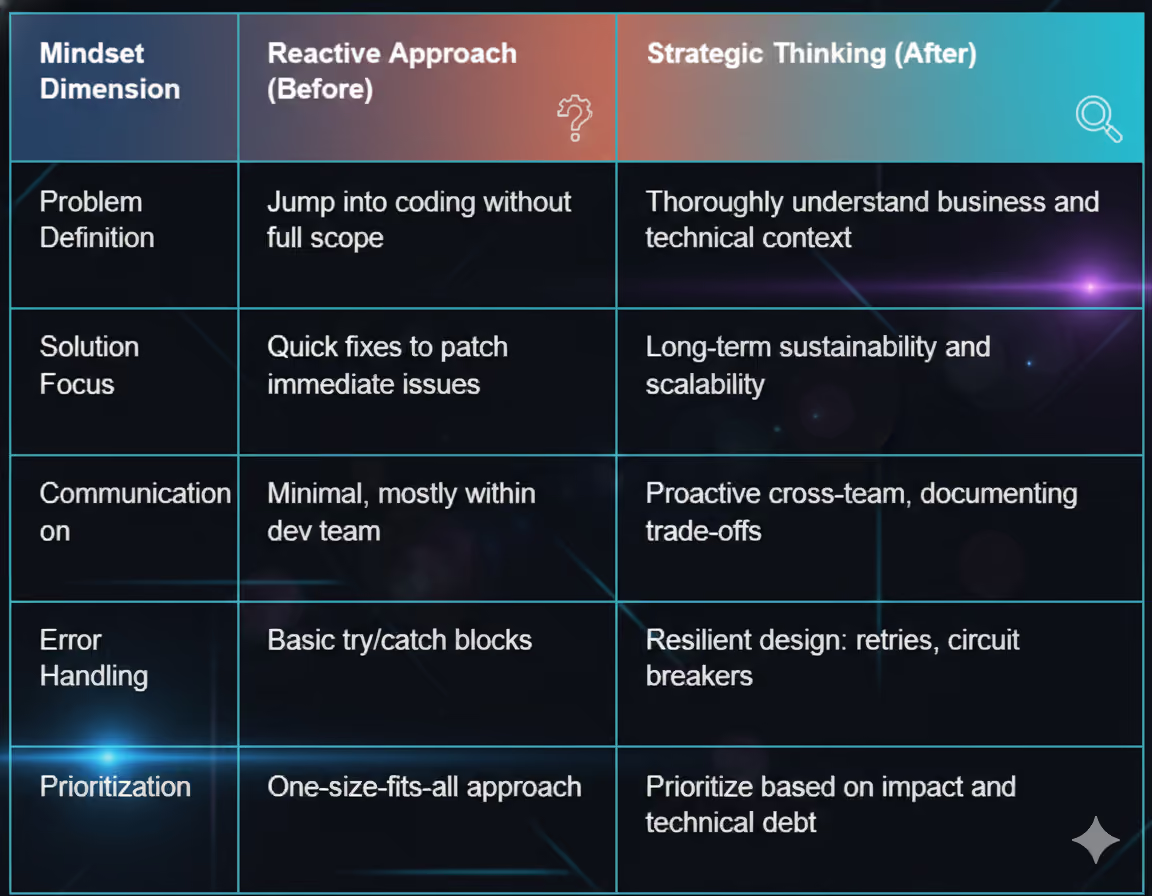
Comparing problem-solving approaches: Before and after strategic thinking
Here’s a quick table for candidates who want to self-assess or prepare better for backend roles:
Final Thought: Why adopting this mindset matters
In your journey to apply for backend engineer, differentiating yourself comes down to demonstrating how you think. Backend engineering isn’t just about writing APIs or optimizing databases , it’s about understanding systems holistically, making strategic tradeoffs, and collaborating effectively.
If you’re ready to take your backend engineering career to the next level or looking to apply for dedicated backend developers positions, adopt this mindset and back it up with solid real-world examples like Alex’s case study.
Ready to think like a Backend Engineer?
Whether you're preparing your first application or looking to elevate your approach, remember: thinking strategically is your edge. For more tips on what employers seek when you apply for backend developers, stay tuned for upcoming posts exploring skill deep dives and interview prep.
Good luck with your backend journey—may your systems be scalable and your mindset even sharper!