If you’re looking to apply for full stack developer roles, you’ve likely faced a common hurdle—how to effectively prepare for skills-based interviews that test not just your knowledge but also your adaptability, problem-solving, and real-world coding abilities. In today’s highly competitive tech job market, understanding how to apply for full stack developer positions means going deeper than mastering resume writing or online applications. It demands a strategic, hands-on approach to interview preparation that demonstrates your practical skills in front of recruiters and hiring managers.
This comprehensive case study, presented in an operator playbook style, offers full stack developer candidates a tried-and-tested roadmap to boost confidence and interview success. You’ll find actionable steps, common pitfalls, and practical tips to sharpen your skills and position yourself as a standout candidate when you apply for a full stack developer or related roles.
Why Skills-Based Interview Preparation Matters for Full Stack Developers
Full stack developers are expected to juggle multiple layers of application development—from front-end interfaces to back-end servers and databases. Employers today prioritize tangible skills over theoretical knowledge, often employing coding challenges, pair programming, or project-based assessments.
Failing to prepare intentionally for these practical interviews means missing out on opportunities, even if your resume looks impressive on paper. Many candidates struggle because they don’t fully understand what employers evaluate or how to structure their preparation effectively.
Case Study: How Jane Prepared to Successfully Apply for Full Stack Developer Roles
Background
Jane is a mid-level software developer aiming to transition into a full stack developer role. Though experienced, Jane struggled with interviewer-led coding challenges and problem-solving questions during interviews. After understanding the requirements better, she revamped her preparation strategy to focus on skills-based interview success.
Step 1: Analyze Job Descriptions Closely
Jane’s Action:
She collected 15 job postings where she wanted to apply for full stack developers. She highlighted common required skills—JavaScript frameworks (React, Node.js), RESTful APIs, database management (SQL, NoSQL), DevOps basics, and problem-solving ability.
Playbook Tip:
Before you apply for a full stack developer position, dissect multiple job descriptions to identify the core technologies and soft skills recruiters emphasize. This helps you tailor your interview practice strategically.
Step 2: Build a Targeted Skills Matrix
Jane’s Action:
She created a personalized skills matrix categorizing her strengths and weaknesses for each required skill. For example:
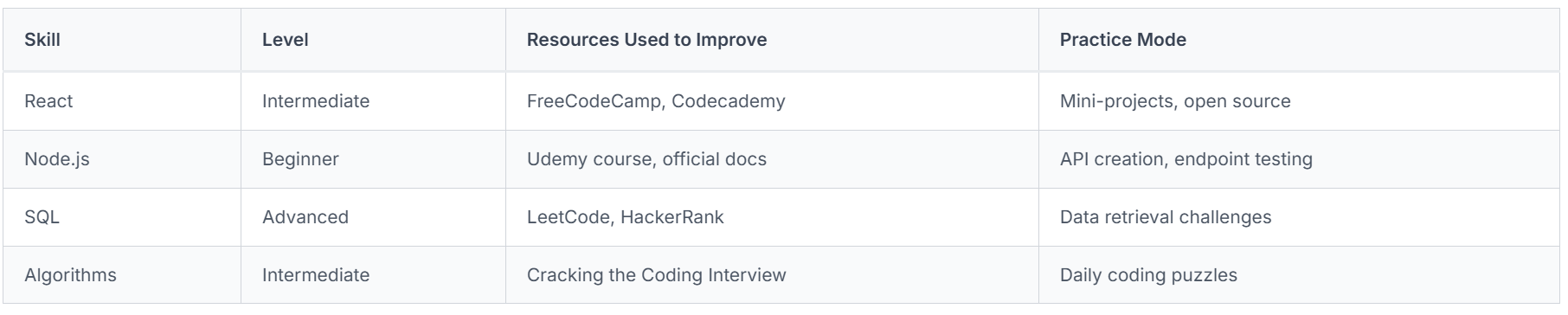
Playbook Tip:
Map out a realistic skills improvement plan. This aligns your study efforts with employer expectations so that when you apply for full stack developer roles, you can confidently showcase key competencies.
Step 3: Engage in Hands-On Practice with Realistic Projects & Challenges
Jane’s Action:
Rather than passive study, Jane programmed daily projects—building a CRUD blog app, a chat server, and a personal portfolio website with full stack capabilities. She also timed herself on typical coding challenge platforms.
Playbook Tip:
When preparing skills-based interviews, practical coding trumps theoretical knowledge. Make small projects that integrate front-end and back-end technologies, and simulate real interview environments by timing problem-solving sessions.
Step 4: Master Behavioral and System Design Questions
Jane’s Action:
She prepared answers to common behavioral questions using the STAR method (Situation, Task, Action, Result). Additionally, she sketched system designs for scalable applications, focusing on trade-offs and technology choices.
Playbook Tip:
Technical skill is only part of the equation. Prepare to explain your design thinking and teamwork experience. This holistic preparation will set you apart as you apply for a full stack developer job.
Step 5: Mock Interviews and Peer Reviews
Jane’s Action:
Jane joined a developers’ Slack community and scheduled weekly mock interviews. She received feedback on her problem-solving style and communication. This iterative feedback was key in refining her approach.
Playbook Tip:
Don’t underestimate the power of mock interviews. Practicing with peers or mentors exposes you to diverse questions and helps improve your articulation—crucial factors when you apply for full stack developers roles across different companies.
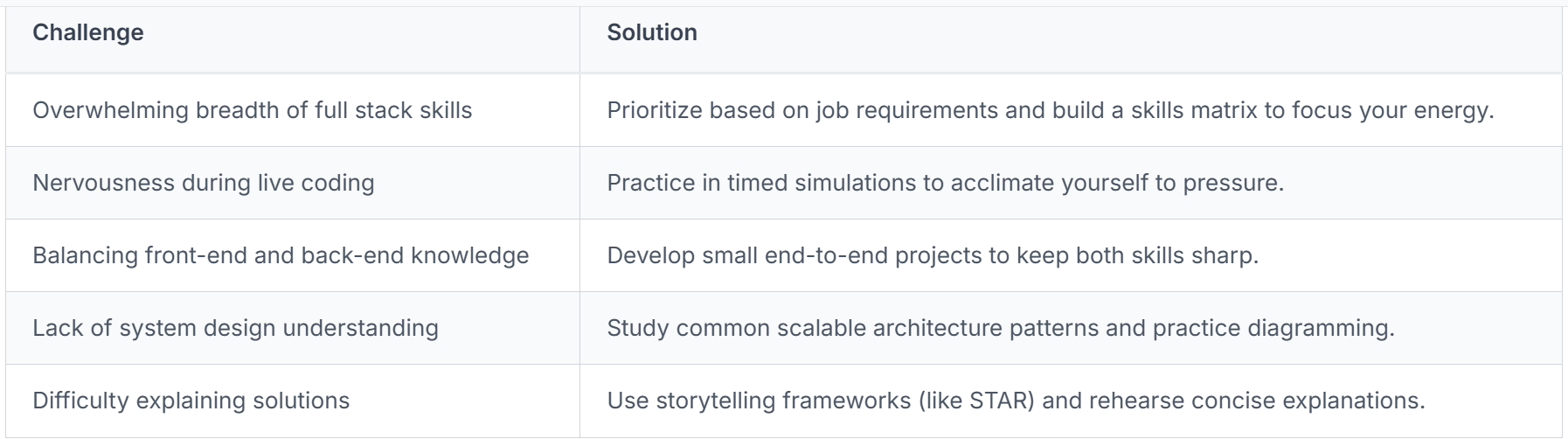
Common Challenges Candidates Face and How to Overcome Them
Operator Playbook: Step-By-Step Action Plan to Apply for Full Stack Developer Jobs with Confidence
- Research & Gather Data: Aggregate 10–15 target job descriptions. Extract core skill requirements.
- Create a Personal Skill Matrix: Self-assess your proficiency. Identify gaps.
- Curate Learning Resources: Choose high-quality tutorials and coding challenge sites.
- Schedule Daily Practice: Dedicate 1–2 hours daily to coding challenges and project development.
- Develop Portfolio Projects: Build 2–3 full stack applications demonstrating your ability.
- Prepare to Discuss Projects: Be ready to explain tech choices, challenges, and improvements.
- Practice Behavioral Questions: Use the STAR method for clear, concise storytelling.
- Engage in Mock Interviews: Find peers or mentors for feedback sessions at least weekly.
- Submit Applications Strategically: Customize your resume and cover letter to mirror key job requirements when you apply for full stack developers.
- Follow Up & Reflect: After each interview, record what worked, what didn’t, and update your preparation accordingly.
Conclusion
If you want to apply for a full stack developer position successfully, a thorough, skills-based interview preparation is non-negotiable. Jane’s example proves that targeted, consistent practice combined with strong behavioral preparation unlocks interview success and job offers.
Remember, how to apply for full stack developer roles with confidence is just as much about the mindset and preparation process as it is about the code you write. By treating your interview prep like an operator runbook—structured, measurable, and iterative—you position yourself as a highly desirable hire in a competitive landscape.
Ready to take the next step? Start building your personalized skills matrix today and tackle your interview preparation with discipline and focus. When you’re ready, go forth and confidently apply for full stack developer roles that match your goals.