In today’s fast-paced technological landscape, the role of product managers (PMs) is transforming at breakneck speed. No longer confined to traditional product lifecycle management, PMs are increasingly expected to lead cross-functional teams through complex, data-intensive projects—often involving cutting-edge technologies like machine learning (ML). This shift demands an expanded skill set, refined responsibilities, and new performance metrics.
This blog offers a comprehensive, data-driven checklist that product managers can use to audit and evolve their role. The insights presented are supported by recent industry data, market research, and practical examples. Whether you are a PM upskilling for AI-centric product lines or a tech executive redefining team roles, this guide will illuminate how the expectations are shifting—and how to successfully meet them.
Understanding the Shift: Why Product Managers Need to Level Up
Multiple studies highlight the changing requirements of product managers:
- According to the 2023 Product Management Skills Survey (Source: Pragmatic Institute), 78% of PMs report increased involvement in AI and ML projects compared to 2021.
- A 2024 Gartner report finds that 65% of product teams now collaborate closely with machine learning specialists, signaling new interdisciplinary coordination expectations.
- LinkedIn’s 2024 Emerging Jobs Report indicates a 45% annual growth in machine learning developer roles, underscoring the importance of product managers understanding how to hire ml developers effectively.
Given this data, product managers must evolve from being generalists to hybrid professionals—combining domain expertise, technical fluency, and people leadership.
Data-Driven Checklist: Evolving Responsibilities, Skills, and Metrics for Product Managers
1. Strategic Integration of Machine Learning Capabilities
Action Items:
- Assess market feasibility: Use data from customer analytics and competitor AI adoption trends to justify incorporating ML features.
- Define ML project scope: Collaborate with data scientists and ML developers to outline deliverables, timelines, and KPIs.
- Hire dedicated machine learning developer talent: When expanding AI capabilities, know how to hire ml developer or prompt HR to hire dedicated ml developers who have specialized expertise.
Example: A leading fintech company successfully launched an AI-driven fraud detection feature after their PM partnered closely with their dedicated machine learning developer, sourced through a targeted strategy to hire machine learning developer profiles with financial services experience.
2. Technical Fluency: From Conceptual to Practical Understanding
Action Items:
- Learn ML basics: Understand core ML models, data pipeline concepts, and typical pitfalls.
- Use ML impact metrics: Incorporate performance metrics such as precision, recall, and ROC-AUC alongside traditional product KPIs.
- Facilitate communication: Translate between stakeholders’ business objectives and developers’ technical constraints.
Hiring Note: When PMs articulate clear technical requirements, they can more effectively hire dedicated machine learning developer talent aligned with project goals.
3. Cross-Functional Leadership and Collaboration
Action Items:
- Coordinate between teams: Manage dependencies among software engineers, ML developers, data scientists, and UX designers.
- Drive agile ML workflows: Adapt agile principles to ML experimentation cycles, prioritizing iterative model development and deployment.
- Promote continuous learning: Lead initiatives to upskill teams on emerging ML tools and frameworks.
Industry Insight: According to McKinsey’s State of AI 2024 report, companies with strong PM-led coordination see 30% faster time-to-market on AI projects, highlighting the vital role PMs play in hire ml developers and integrating their outputs with product goals.
4. Evolving Performance Metrics and Accountability
Action Items:
- Shift from outputs to outcomes: Focus reporting on business value generated by ML features, such as conversion lift or cost savings.
- Measure model quality and user impact: Use model drift detection rates, user engagement changes, and feedback loops.
- Implement ethical and compliance checks: Ensure models comply with data privacy laws and ethical guidelines.
Key Metric Example: A healthcare startup’s PM team incorporated model fairness metrics into their workflow post-hiring a dedicated ML developer, ensuring better regulatory compliance and patient trust.
5. Effective Talent Acquisition and Team Building in ML
Action Items:
- Understand the ML talent landscape: Recognize the difference between general software engineers and specialists—roles are nuanced.
- Develop precise role descriptions: Clearly state technical and domain requirements to hire ml developers who fit both company culture and project needs.
- Leverage multiple sourcing channels: Utilize job platforms, recruitment agencies, and niche communities to hire dedicated ml developers rapidly.
Example Use Case: A tech startup credits their fast AI feature rollout to their PM’s ability to partner with HR and hire machine learning developer talent quickly and through specialized channels.
Final Thoughts: Mastering the New Product Manager Paradigm
The evolving expectations for product managers call for a radical enhancement of skill sets and responsibilities. The ability to hire dedicated machine learning developer talent, understand ML project dynamics, and lead cross-functional teams through data-rich innovation pipelines has become central to the PM’s toolkit.
By following this checklist, product managers can self-assess and prepare for the future, ensuring they don’t just keep pace with technological change but become pivotal drivers of it.
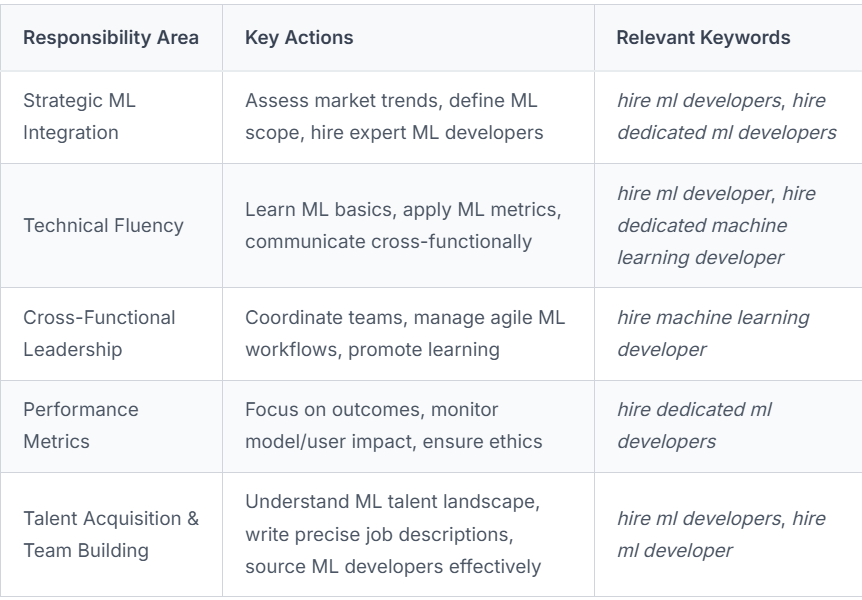
Summary Checklist at a Glance
Stay informed, stay relevant, and lead the charge in the era of AI-enhanced products. If you're ready to expand your team’s machine learning capabilities, know that learning how to hire ml developers or hire dedicated machine learning developer professionals is a critical next step to success.
For more data-driven insights on product management and AI integration, subscribe to our newsletter and join industry webinars."