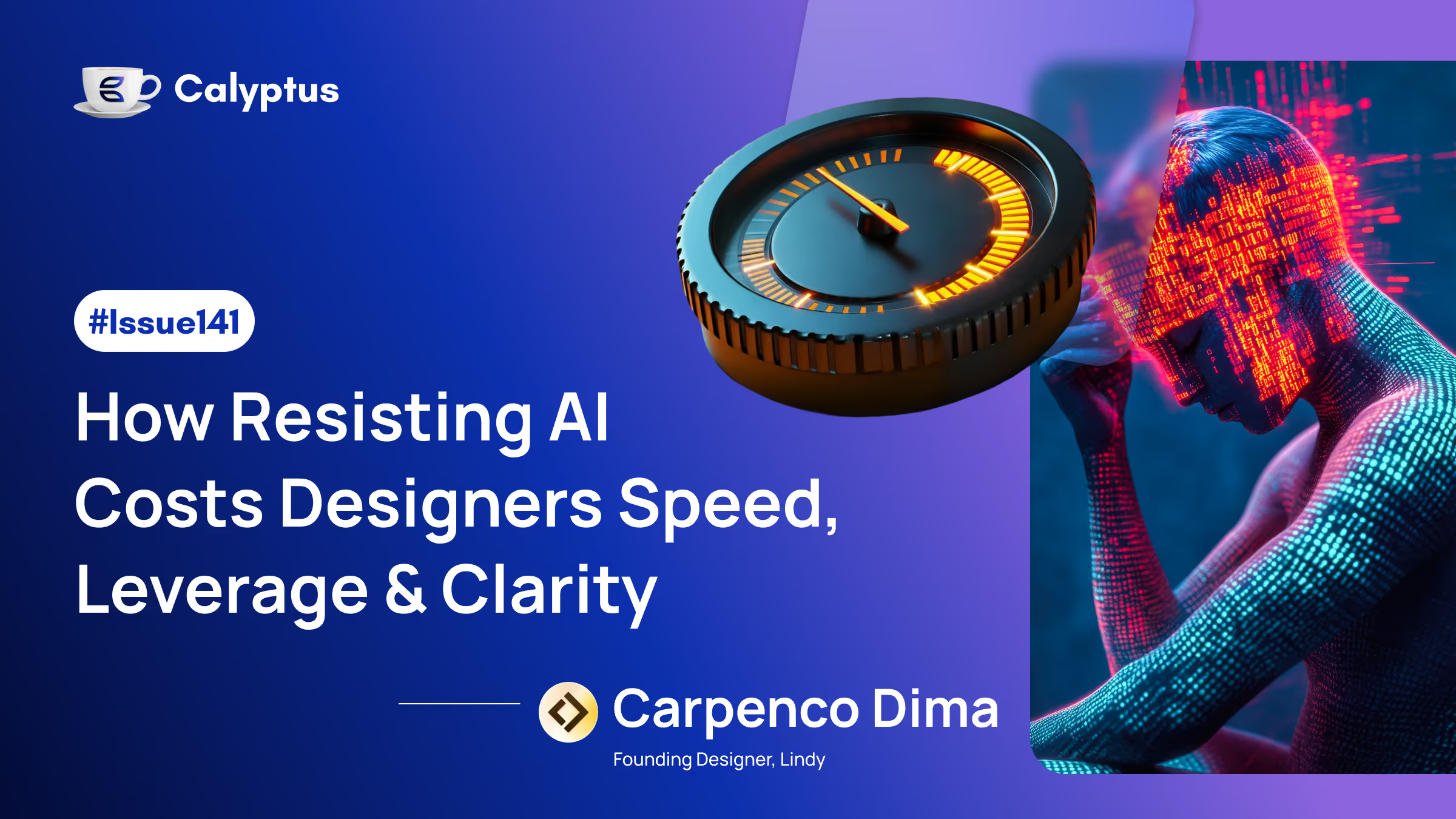
This week on Coffee with Calyptus, we sat down with Carpenco Dima, founding designer at Lindy, to talk about focus, adaptability, and designing in fast-moving environments. From being the only designer juggling constant priorities to jumping into entirely new product domains, Carpenco shares how intentional prioritization and deep user research shape his work. The result is a thoughtful look at how modern designers can move faster without losing craft.

This week on Coffee with Calyptus, we sat down with Carpenco Dima, founding designer at Lindy, to talk about focus, adaptability, and designing in fast-moving environments. From being the only designer juggling constant priorities to jumping into entirely new product domains, Carpenco shares how intentional prioritization and deep user research shape his work. The result is a thoughtful look at how modern designers can move faster without losing craft.
When you’re the only designer, everything feels urgent all the time. One moment you’re designing a new feature, the next you’re tweaking the landing page. How do you decide what actually matters when everything feels like a priority?
The biggest take-away for me was learning how to be very intentional about priorities and communicate them clearly. What I started doing, and still do today, is setting clear priorities for each week and sharing them openly on the design channel on Slack. I stick to those as much as possible, and when new requests come in, I always refer back to that list.
If someone asks for something new, I’ll usually respond with something like, “Is this urgent? If so, let’s figure out what gets deprioritized.” That simple question changes the conversation. It makes trade-offs visible and helps everyone understand that if something new comes in, something else has to move. I’ve learned that it’s okay to say no, as long as you explain why and keep people in the loop.
If something truly is urgent, then priorities should shift, but that decision needs to be transparent so no one is left wondering whether their request is still being worked on or not.
Over time, you build a muscle for this. You get better at spotting what really matters and what can wait. And honestly, a simple to-do list with clear deadlines goes a long way. It might sound basic, but for me, it’s been one of the most effective ways for staying focused and getting things done.
You've worked across radically different products, from molecular beverage printers at Cana to virtual event platforms at Remo. How do you approach designing for something completely unfamiliar, and what's your process for gaining deep domain expertise quickly?
Working in very different industries has actually helped me become much more comfortable jumping into the unknown. When you’ve designed for products that are completely different from each other, you learn how to adapt quickly and not be afraid of new problem spaces.
When I start working on something unfamiliar, I always begin with research. I look for the strongest products in that space and really take the time to experience them properly. That means everything from the landing page and onboarding to what the product feels like after a few weeks of real use. I document what works, what doesn’t, and what feels great. Over time, this builds your product taste and your sense of what good UX should feel like in that specific domain.
From there, I start connecting the dots. I take the best ideas from different products, notice where there are gaps, and think about how those gaps could be filled in a way that makes sense for users. That’s usually where the most interesting design opportunities show up.
I also spend a lot of time with user feedback at scale. Reading app reviews and comments helps me understand what users love, what frustrates them, and what they care enough about to write down. That kind of honest feedback is incredibly helpful and often points directly to where design can make the biggest difference.
Last but not least, I talk to users directly. I jump on calls with real people, ask about their day, how the product fits into their workflow, what excites them, and where things fall short. Those conversations bring everything together and help me design with real context, not assumptions.
Overall, my process is about learning fast, staying curious, and turning complex problems into simple, thoughtful experiences people actually enjoy using.
As a founding designer at Lindy working with AI agents, how are you personally using AI tools in your design process today, and what do you think designers who resist AI are going to miss out on in the next few years?
Using AI in my day-to-day design work is honestly a no-brainer at this point. There are so many ways AI agents can make a designer’s life easier, especially in fast-paced environments. I use them for things like taking notes during product reviews, creating and updating my to-do lists, and keeping track of work that might otherwise slip through the cracks. It frees up mental space so I can focus more on actual design thinking.
One of the biggest ways I use AI is for writing better, clearer copy. When I design, I try to use realistic copy as early as possible so the screens and user flows feel real, not abstract. AI helps me clean up grammar, avoid typos, and refine wording before anything ever gets close to production, which prevents a lot of small but painful issues. I also use it to brainstorm labels and descriptions, especially when I want the next step for the user to feel obvious and effortless.
I also use AI as a starting point when I am working on a new screen or tackling a new problem. I will work alongside an agent to generate a rough wireframe or layout idea. It is not about shipping what the AI gives you. It is about seeing different angles you might not have thought of. From there, I strip it down, shape it, bring it into Figma, and add the human judgment and craft that really makes it work.
For more complex user stories, I will even use AI to test my designs. I feed flows into Lindy and ask it to act like a user going through a specific task and sharing its thoughts along the way. It is not a replacement for real user testing, but it is a great way to catch gaps early and pressure test ideas before they reach actual users.
I think designers who resist AI are going to miss out on speed, leverage, and better decision making. AI will not replace good designers, but designers who know how to work with AI will move faster, explore more ideas, and spend more time on the parts of design that really matter.
We hope you enjoyed this edition of Coffee with Calyptus. Stay curious, stay inspired, and keep building what matters. Explore more editions and insightful articles below.