Hiring quality assurance professionals has become increasingly complex as their roles evolve beyond traditional testing tasks. Companies looking to hire quality assurance engineers must now navigate a workforce landscape where QA engineers take on a broader array of responsibilities, including automation, continuous integration, and close collaboration within agile and DevOps teams. This shift challenges hiring managers to rethink job requirements, screening methods, and interview practices to find candidates who can thrive in this integrated environment.
This post explores the changing expectations placed on QA engineers, outlines the new skills and mindset they need, and provides an operator playbook to help organizations hire quality assurance engineers who can help drive quality and efficiency in modern software development cycles.
The evolving role of QA engineers in agile and Devops settings
The traditional view of QA engineers as gatekeepers who primarily execute manual test cases is outdated. Reports such as the World Quality Report 2023 highlight that organizations increasingly demand QA professionals to be end-to-end contributors who participate in test automation, continuous testing, and quality advocacy throughout the software delivery lifecycle. According to Gartner, “quality is becoming a collective responsibility,” emphasizing that QA engineers should collaborate closely with developers and operations teams to build quality from the start.
Key aspects of this shift include:
- Automation expertise: Proficiency in automated testing frameworks, scripting, and toolchains to ensure faster and more reliable test coverage.
- Integration with ci/cd: Ability to embed testing practices seamlessly within continuous integration and continuous deployment pipelines.
- Agile mindset: Familiarity with iterative development practices, including sprint planning and retrospectives, ensuring QA activities align with dynamic feature releases.
- Strategic insight: QA professionals are expected to analyze risk, influence quality strategy, and provide feedback beyond just finding bugs.
- Communication skills: As cross-functional team members, QA engineers must effectively communicate with developers, product owners, and sometimes customers.
Operator playbook for hiring QA engineers who fit the new paradigm
To hire qa engineers who meet these evolving requirements, organizations must adjust their hiring strategies and evaluation criteria. Below are practical steps hiring managers can follow:
1. Redefine job descriptions to reflect current expectations
Create job postings that emphasize automation, integration with DevOps, and strategic involvement. Avoid outdated language focused solely on manual test execution.
2. Identify key skills and experience
Look for candidates with hands-on experience in test automation tools (e.g., Selenium, Cypress), scripting languages (Python, JavaScript), CI/CD platforms (Jenkins, GitLab), and agile methodologies. Also evaluate problem-solving abilities and quality advocacy.
3. Use structured technical assessments
Include coding exercises related to automation scripts or designing test cases for integration pipelines. Assess technical proficiency alongside understanding of quality processes.
4. Prepare interview scorecards aligned with role needs
Develop scorecards with criteria spanning automation skills, continuous integration experience, collaborative mindset, and strategic thinking. Use standardized scoring to reduce bias.
5. Blend behavioral and technical interviews
Explore candidates’ previous experiences working in agile teams, handling pressure of rapid releases, and influencing quality improvements beyond testing artifacts.
6. Emphasize growth potential and cultural fit
In a fast-evolving role, openness to learning new tools and adapting to changing processes is crucial.
Job description template for hiring QA engineers
Job title: quality assurance engineer – automation and devops integration
About the role:
We are looking to hire quality assurance engineers who can drive quality across all phases of the software delivery pipeline. This role requires expertise in automated testing, continuous integration, and collaborative agile development.
Key responsibilities:
- Develop, maintain, and execute automated test suites for web and mobile applications.
- Integrate automated tests into CI/CD pipelines using tools such as Jenkins, GitLab, or CircleCI.
- Collaborate with developers, product owners, and operations teams to ensure high-quality releases.
- Analyze product risks and contribute to test strategy development.
- Participate in sprint planning, retrospectives, and continuous process improvement initiatives.
Required skills and experience:
- Strong proficiency in automation frameworks (Selenium, Cypress, Appium).
- Experience scripting in Python, JavaScript, or similar languages.
- Familiarity with CI/CD tools and pipelines.
- Hands-on experience working in agile teams.
- Demonstrated ability to communicate technical concepts clearly.
- Strategic approach towards quality, including risk assessment and process advocacy.
Preferred qualifications:
- Knowledge of containerization and cloud testing environments.
- Exposure to security and performance testing.
- Experience with test management and defect tracking tools.
How to use interview scorecards to hire qa testers effectively
An interview scorecard should standardize candidate evaluation across key competencies aligned with the shifting QA role. For example:
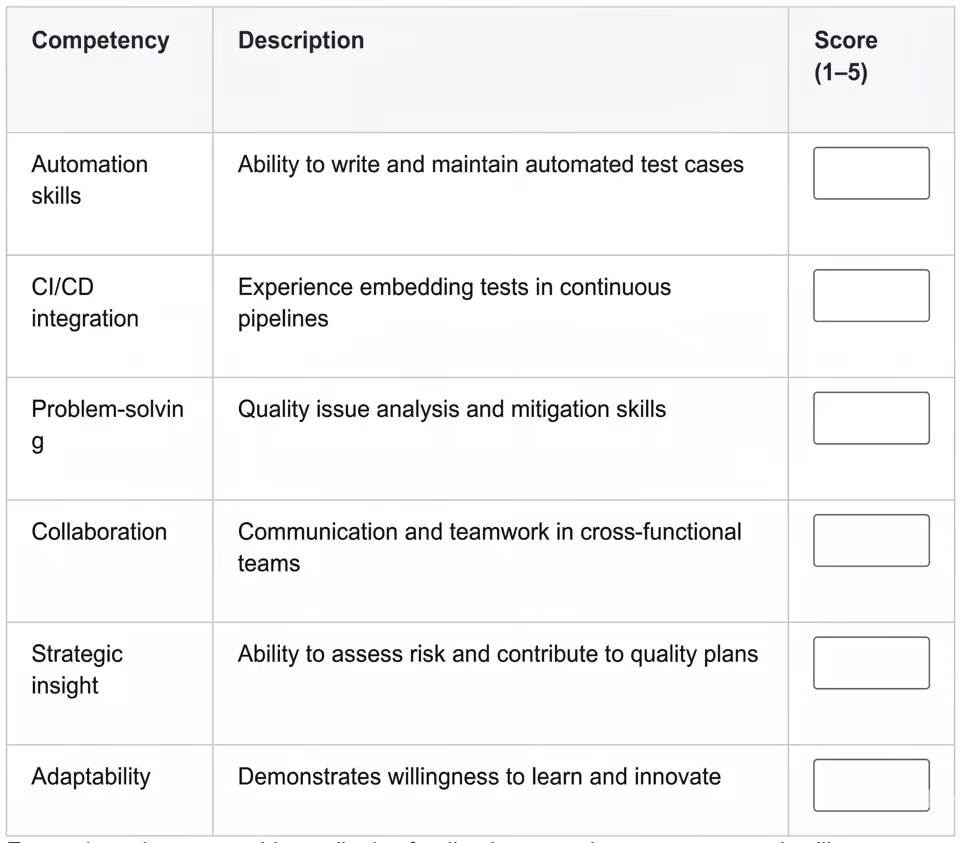
Ensure interviewers provide qualitative feedback to complement scores, and calibrate assessments as a team to identify top performers confidently.
Hiring QA testers with a balance of technical proficiency and strategic insight
Organizations looking to hire qa testers must balance technical skills with the ability to think strategically about quality outcomes. Technical proficiency ensures the candidate can handle automation and integration demands, while strategic insight drives continuous improvement to testing processes and product quality.
Look for candidates who:
- Can script and automate tests reliably.
- Understand the purpose behind testing beyond defect detection.
- Engage with product requirements and participate in overarching quality discussions.
- Adapt testing approaches as technologies and development models evolve.
Conclusion: Evolving hiring practices to empower QA teams
As the QA function transcends its traditional boundaries, hiring managers who want to hire quality assurance talent that thrives must evolve their hiring strategies accordingly. Emphasizing automation expertise, ci/cd integration skills, and a collaborative, strategic mindset allows organizations to build high-performing QA teams that integrate quality into every software delivery stage.
For further reading, resource World Quality Report 2023 which provide data-driven perspectives on these trends. By following this operator playbook, companies are better positioned to hire qa engineer candidates capable of driving success in agile and DevOps environments.