Engineering managers serve as a critical bridge between technical teams and business objectives. Yet many organizations struggle to hire engineering managers who can effectively grow teams, steer projects, and align engineering outputs with strategic goals. The challenge lies in identifying candidates with not only strong technical backgrounds but also proven leadership and cross-functional communication skills. Too often, hiring decisions hinge solely on resumes or vague gut feel rather than a data-driven, structured approach.
This blog presents a detailed case study illustrating how a well-designed hiring process can overcome common pitfalls and help you confidently hire engineering managers who will thrive in your environment. Backed by practical insights and a ready-to-use hiring scorecard template, this operator playbook will transform how you approach recruitment for engineering leadership roles.
The hiring challenge: Avoiding the common pitfalls
Company X, a mid-sized SaaS provider, faced stalled product development cycles and high turnover among its engineering leads. The leadership team recognized their existing hiring process for engineering managers was deeply flawed. Unclear role definitions, inconsistent interview criteria, and lack of objective evaluation frameworks. Consequently, many hires failed to meet expectations, leading to lost time and morale dips.
The problems they faced were common in tech organizations:
- Unclear criteria: What exactly does success look like for an engineering manager in their context?
- Unfocused interviews: Candidate evaluations didn’t consistently probe people management, technical judgment, or stakeholder collaboration.
- No scorecard system: Interviews yielded subjective assessments without standardized metrics.
- Inadequate tooling and workflows: Recruiters and hiring managers lacked coordination tools to share structured feedback promptly.
The imperative was clear: To hire engineering managers effectively, the company needed a repeatable, scalable hiring framework.
The structured approach that transformed company x’s hiring
Company X partnered with an experienced talent acquisition consultant specializing in technical leadership roles to overhaul their process. The consultant’s methodology centered on these pillars:
1. Define role-specific hiring metrics
Crafting a clear hiring scorecard tailored to the engineering manager role was the linchpin. This scorecard broke down key competencies into measurable areas such as:
- Technical acumen and decision-making: Ability to guide architectural decisions and code quality without micromanagement.
- Leadership and team growth: Demonstrated experience mentoring engineers and evolving team culture.
- Cross-functional collaboration: Capability to liaise with product managers, design, and stakeholders.
- Execution and project ownership: Delivering projects on schedule while managing risks and dependencies.
- Communication skills: Clarity and influence both internally and externally.
Each area had behavioral indicators and rating scales for interviewers to score systematically.
2. Structure interviews around core competencies
To reduce inconsistency, the interview workflow included:
- A technical vision assessment: exploring candidate’s approaches to complex system design and technical debt management.
- A leadership scenario round: behavior-based questions probing management challenges like conflict resolution and motivation.
- A stakeholder communication exercise: role-playing to assess collaboration with non-engineers.
- A strategic execution discussion: understanding of delivery timelines, resource constraints, and prioritization.
Interviewers were trained to use the scorecard during conversations and provide calibrated feedback immediately after.
3. Leverage hiring tools and workflows
To streamline coordination and speed decision-making:
- Company X implemented an applicant tracking system (ATS) with customizable scorecards.
- Coordinated calendar scheduling and interviewer reminders ensured complete participation.
- Automated reports summarized candidate scores and comments for calibration meetings.
- A clear candidate profile template standardized information across recruiters and managers.
Results and insights
Within three hiring cycles post-implementation, Company X reported:
- 40% faster time-to-hire for engineering manager roles.
- Improved quality of hire measured by new managers’ team retention and project delivery metrics.
- Greater alignment between hiring managers and recruiters facilitated by the standardized processes.
This validated that organizations who want to hire engineering managers must build a structured hiring framework, supported by precise scorecards and optimized workflows.
Best practices for designing an effective hiring scorecard
When you hire engineering managers, your scorecard will be the cornerstone of objective selection. Consider these practical tips:
- Define competencies aligned to your company context. A startup’s need differs from a mature enterprise.
- Use behavioral anchors rather than vague traits. For example, instead of “good communicator,” specify “clearly explains complex technical topics to non-technical stakeholders.”
- Weight criteria based on the role’s immediate priorities (e.g., more emphasis on team leadership for a scaling org).
- Train interviewers on using the scorecard consistently to minimize bias.
- Iterate your scorecard annually based on feedback and hiring outcomes.
Tooling and workflow strategies to optimize your engineering manager hiring process
To hire senior engineering managers effectively, invest in integrated systems and efficient workflows:
- Applicant tracking and scorecard integration: Select ATS platforms allowing you to embed customized scorecards, enabling real-time interviewer scoring.
- Collaborative feedback platforms: Tools like Greenhouse or Lever facilitate consolidated feedback and reduce decision latency.
- Structured interview training: Adopt interviewer enablement sessions focused on role-specific questions and unbiased evaluation.
- Transparent candidate communication workflows: Set expectations with candidates through automated updates to enhance candidate experience.
Ready-to-use hiring scorecard template for engineering managers
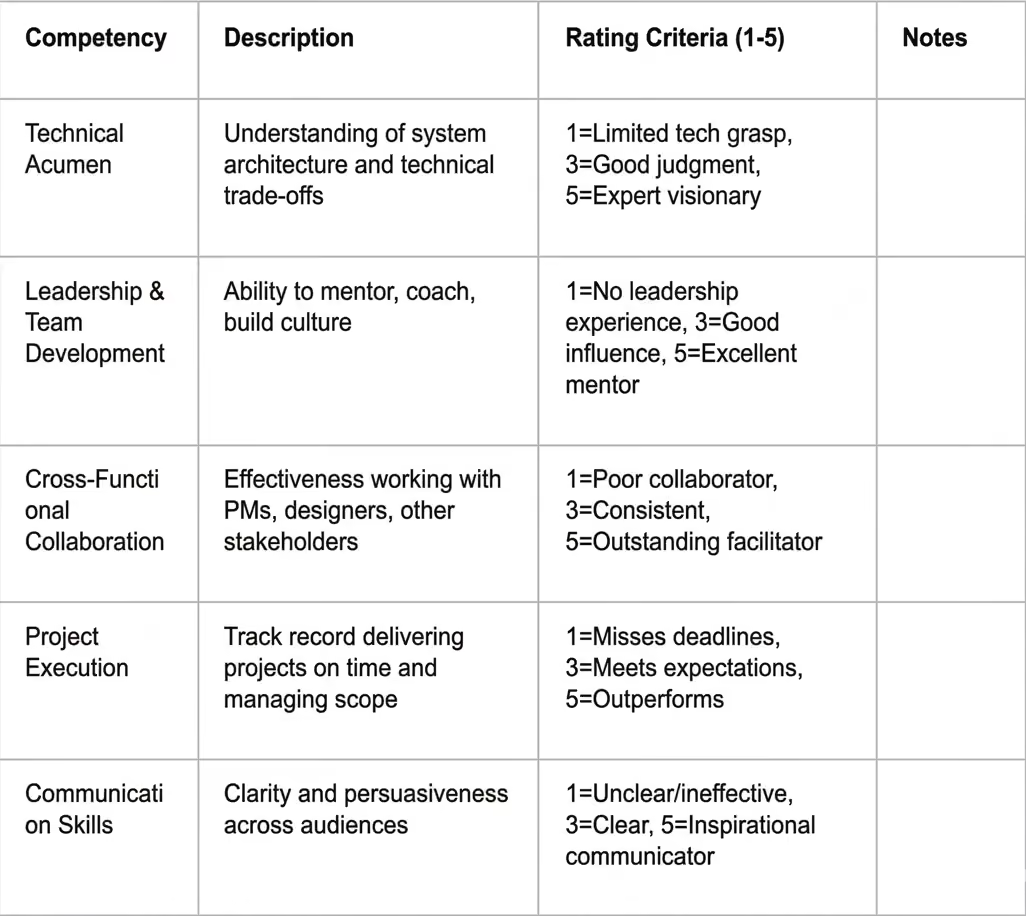
Instructions: Interviewers should assess each competency based on evidence from the interview, assign a score of 1-5, and provide supporting notes. Scores are averaged for holistic evaluation.
Conclusion
Hiring engineering managers is a complex challenge that demands more than traditional recruiting practices. By implementing a structured hiring scorecard tailored for engineering leadership roles, designing focused interview workflows, and leveraging technology efficiently, organizations can significantly improve their hiring outcomes.
For further reading on hiring best practices in tech leadership, explore resources from Harvard Business Review on hiring managers, and recruiting insights from Greenhouse and Lever.
Use the included scorecard template as a starting point, customize based on your company’s needs, and iterate frequently. This approach will give you measurable criteria to make confident, repeatable decisions that win in the competitive market for engineering management talent.