Employers often face a familiar challenge, deciding how and when to hire a graphic designer amid competing business priorities. With limited budgets, tight project timelines, and diverse demands across teams, understanding how to prioritise design hires becomes crucial to maximizing value. Hiring a graphic designer is more than filling a role; it’s about strategically aligning design support with business goals to create meaningful full stack impact.
This guide walks you through a conditional prioritisation methodology that helps employers evaluate design needs holistically by balancing the expected impact of graphic design against the effort to hire and onboard new talent. By applying this framework, you can optimize hiring decisions under resource constraints and scale design capacity where it matters most.
Why prioritising Graphic Design hires matters
Graphic design plays a critical role across marketing, product development, customer engagement, and brand identity. Yet budget limitations and competing priorities often force employers to question when investing in a graphic designer is justified.
Without prioritisation, employers might either:
- Overextend hiring for low-priority design tasks, wasting resources
- Delay critical hires that unlock major business impact
- Struggle to balance workload, causing missed deadlines and subpar output
Conditional prioritisation converts these competing demands into a clear decision framework: when is the full stack impact of bringing on a graphic designer worth the effort and cost of hiring? This approach helps achieve not just hiring efficiency, but maximum alignment of graphic design for hire with business goals.
Step 1: Assess design needs by mapping impact and effort
Start by cataloguing all current and upcoming projects or tasks where a graphic designer is required. Examples include: website redesigns, social media campaigns, UI revamps, print collateral, or product packaging.
For each design need, estimate:
- Expected impact: How much will quality graphic design of this project improve business outcomes (e.g., increased sales, better user engagement, brand loyalty)? Consider measurable metrics such as conversion lifts, customer feedback, or strategic importance.
- Effort to hire and onboard: What resources and time are needed to find, recruit, and train a graphic designer for hire? Include recruiting costs, ramp-up periods, ongoing management, and opportunity costs of delayed projects.
Plot these on a two-dimensional matrix:
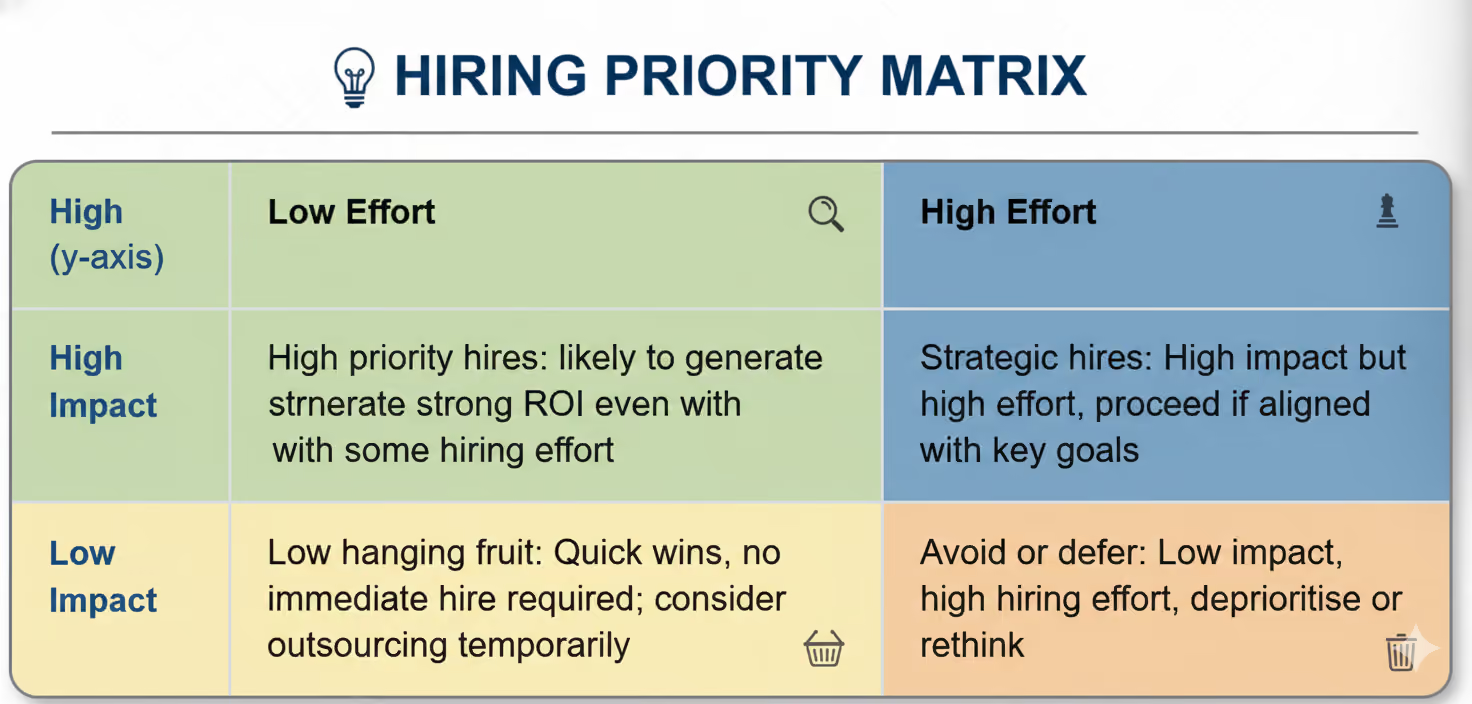
This visual helps clarify which design projects should trigger hiring graphic designers immediately and which can be deferred, done in-house, or outsourced.
Step 2: Define conditions for when to hire a Graphic Designer
Deciding whether to hire a graphic designer hinges on a conditional set of factors:
- Impact threshold: Set a minimum expected business impact that justifies the time and cost to hire. For example, projects expected to improve revenue or brand strength by at least 10% may qualify.
- Hiring effort tolerance: Define your capacity for recruitment, onboarding, and training. If hiring resources are constrained, only projects with very high impact should qualify.
- Urgency and timelines: Projects with tight deadlines requiring full-time design support should weigh heavier on immediate hires. Lower urgency tasks might be postponed or fulfilled via contractors.
- Budget constraints: Align hiring decisions with current budget limits. Sometimes impact justifies extra spend; other times, creative alternatives are more cost-effective.
When assessing a graphic designer for hire, consider the candidate’s versatility across design needs to maximize impact per hire.
Step 3: Prioritise design requests based on business goals and resource constraints
After mapping and defining hiring conditions, rank graphic design needs accordingly. For example:
- A product launch requiring branding and packaging design with major sales impact but moderate hiring effort should be marked as top priority to hire a graphic designer immediately.
- Routine social media creatives with low additional impact may be assigned to an existing team member or outsourced without hiring.
Use a simple scoring system weighted by impact and effort scores tied to business goals to rank the hiring priority for each design request. This quantification aids transparency and consensus among stakeholder teams.
Step 4: Select the right type of graphic design for hire based on priority
Not all design hires have the same impact-effort profile. Evaluate:
- Freelancers or agencies for low impact or short-term projects requiring low hiring effort
- Part-time or contract graphic designers for medium-impact projects balancing cost and flexibility
- Full-time graphic designer hires for critical, ongoing design needs driving major impact
This decision optimizes resource allocation and ensures you hire graphic designers most appropriate for the conditional priority scenario.
Example scenario:
Imagine a mid-sized ecommerce company juggling product page redesigns, email marketing templates, and new promotional campaigns. Through impact-effort mapping, the product page redesign scores high impact with moderate effort to hire while campaign templates score moderate impact but low effort.
The prioritisation framework suggests:
- Hire a full-time graphic designer focused on the product page redesign to drive major conversions.
- Outsource or temporarily assign internal resources for campaign templates to preserve budget.
- Defer low-priority design projects until additional resources are available.
This prevents premature hiring while ensuring valuable projects receive expert design support on time.
Balancing workload, budget, and timelines:
Effective use of conditional prioritisation keeps workload balanced—preventing bottlenecks or burnout. It aligns hiring with budget realities by only pursuing hires that clear impact-effort thresholds. Managing timing avoids costly last-minute hires or missed deadlines.
Regularly revisit impact and effort estimates as business priorities evolve and refine hiring strategies accordingly. This dynamic method supports continuous optimisation of your graphic design capacity building.
Conclusion
Hiring a graphic designer without a strategic framework risks misaligned resources and lost business opportunities. By applying conditional prioritisation that weighs full stack impact against hiring effort, employers can confidently decide when and which graphic design for hire to onboard.
This approach drives smarter hiring decisions that support workload balance, budget discipline, and project success while maximizing value from your graphic design investment.
Prioritise strategically. Hire purposefully. Unlock the whole business impact.
Resources:
Society for Human Resource Management (SHRM) on hiring ROI
McKinsey on prioritising business resources